Freight broker recordkeeping is more specific than “save the rate confirmation and invoice.” Under 49 CFR § 371.3, a broker must keep a record of each transaction, include six categories of information, retain the required record for three years, and allow each party to the brokered transaction to review that transaction record.
That is the public rule. This guide turns it into an operating test: can your team assemble one complete, readable transaction file without reconstructing the load from inboxes, chat threads, and someone’s memory?
This is an operations checklist, not legal advice. Use the current eCFR text as the authority and involve counsel when interpreting the rule for a specific dispute, contract, or records request.
The short answer: what must a freight broker keep?
The current text of § 371.3(a) says the record for each transaction must show:
- the consignor’s name and address;
- the originating motor carrier’s name, address, and registration number;
- the bill of lading or freight bill number;
- the broker’s compensation for the brokerage service and the payer’s name;
- any non-brokerage service connected with the shipment or activity, its compensation, and the payer’s name; and
- freight charges collected by the broker and the date the carrier was paid.
The regulation permits master lists for consignors and for carrier address and registration information instead of repeating that information in every transaction record. That permission does not make retrieval optional: the load-level record and the referenced master data still need to resolve into a usable record.
The required records must be kept for three years. Each party to a brokered transaction has the right to review the required record for that transaction.
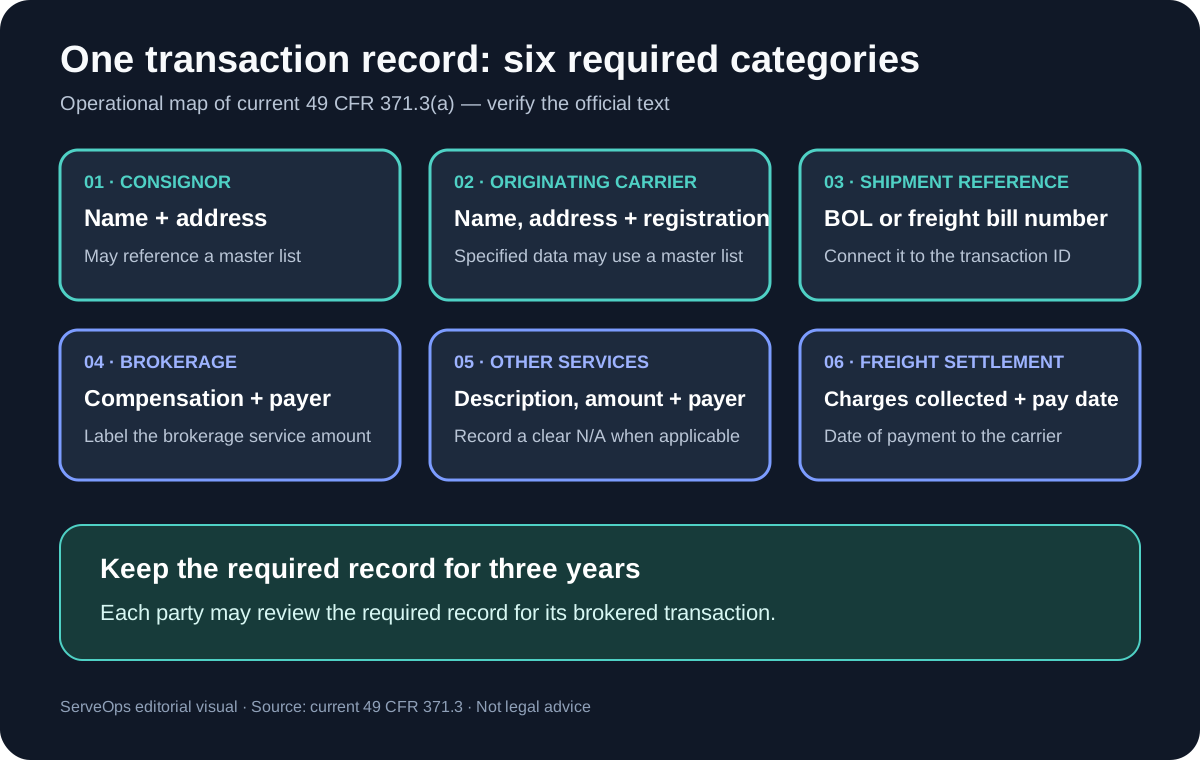
Build one transaction file, not a pile of documents
A bill of lading, carrier invoice, customer invoice, rate confirmation, proof of delivery, and payment record may all support the transaction. But § 371.3 describes information the record must show; merely having several attachments does not prove that every required field is present or connected.
Use a stable transaction identifier—normally your internal load number—to connect four evidence groups:
- Parties: consignor and originating carrier identity, including the carrier’s registration number.
- Shipment reference: the bill of lading or freight bill number.
- Brokerage compensation: the amount received for brokerage and who paid it.
- Services and settlement: any non-brokerage service and related compensation, plus freight charges collected and the carrier-payment date.
“Not applicable” should be an intentional, reviewable value for non-brokerage services, not an empty field whose meaning changes depending on who opens the load.
The three-year recordkeeping workflow
1. Define the record at load creation
Assign a unique load identifier and define where each § 371.3 field will live. If consignor or carrier details come from a master record, preserve a reliable relationship between the load and that record. Decide how corrections are documented so the current value does not erase the reason for a change.
2. Complete financial fields during settlement
Do not wait for a records request to infer compensation from invoice totals. Record brokerage compensation and payer identity explicitly. Record any non-brokerage service separately, with the amount and payer. If the broker collected freight charges, capture the amount and the date the carrier was paid.
This separation matters operationally even when multiple amounts appear on the same customer document. A reviewer should not need a private spreadsheet formula to understand which value answers which regulatory field.
3. Close the file with a completeness gate
Before calling the transaction complete, verify that the bill of lading or freight bill number is present, the master-record references still resolve, required amounts have clear labels, and the carrier-payment date is recorded when applicable. Flag exceptions for an owner, operations lead, or designated reviewer.
4. Preserve retrievability for the full period
Retention is not just “the file probably exists in a backup.” Test whether an authorized person can locate and read the required record during the three-year period. Include archived users, renamed customers, merged carrier records, and migrated loads in the test.
5. Create a controlled request process
Because § 371.3(c) gives each party to a brokered transaction a right to review that transaction record, define an intake and identity-check process, an owner for the response, a scope check, and a response log. The rule does not say every requester can browse every load. Confirm the requester is a party and limit the response to the relevant transaction record.
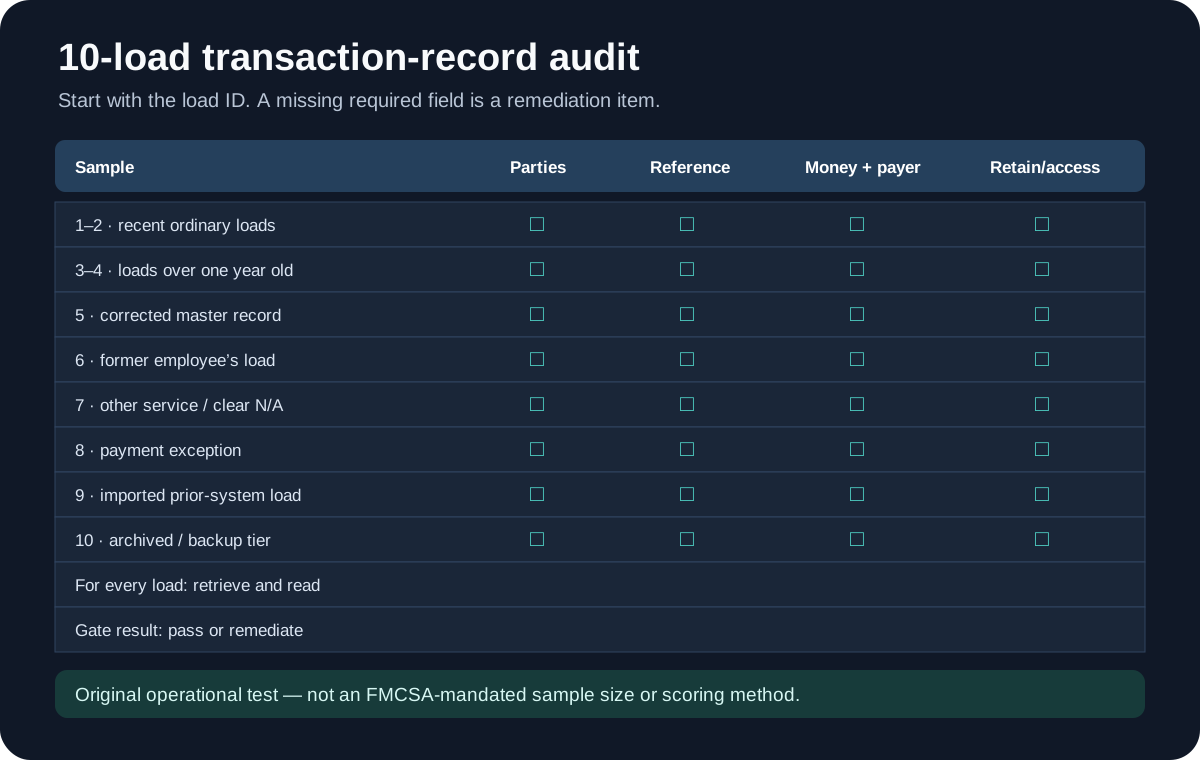
Run a 10-load record audit
Choose 10 closed loads that expose different failure modes:
- two recent, ordinary loads;
- two loads more than a year old;
- one load with a corrected carrier or customer record;
- one load handled by a former employee;
- one load with a non-brokerage service—or an explicit “not applicable” value;
- one load with a payment exception;
- one load imported from a prior system; and
- one load stored in an archive or backup tier.
For each load, start with only its transaction identifier. Time how long it takes an authorized reviewer to retrieve the record, but treat completeness as a gate—not a speed contest. A fast, incomplete file fails.
Score each load in four sections: party identity, shipment reference, compensation and payer, and settlement/retention/access. Any missing required field is a remediation item even if the total score looks good.
Questions to ask a TMS vendor before relying on it
Use evidence, not a feature-list answer:
- Show where every § 371.3(a) field is stored or derived.
- Show how a load links to consignor and carrier master records.
- Show how carrier registration numbers and later corrections are handled.
- Show brokerage compensation separately from other services and freight charges.
- Show the payer for brokerage and non-brokerage services.
- Show the carrier-payment date for a closed load.
- Retrieve a transaction after a user is deactivated and a customer is renamed.
- Export one complete transaction record into a readable, durable format.
- Explain retention, deletion, backup restoration, and customer data export terms.
- Demonstrate how an authorized team member can answer a party-review request without exposing unrelated transactions.
Record what the product actually demonstrates, what requires configuration, what depends on another system, and what is unavailable. Contract language and a live test should agree.
Related Broker Guides
- Audit invoice-ready documents across three closed loads
- Set up a new customer before the first load
- Migrate broker records and reconcile the cutover
These routes are staged recommendations. Confirm each final Broker Guides URL and approval state before adding the links in the CMS.
Current rule versus proposed broker-transparency changes
FMCSA published a notice of proposed rulemaking on November 20, 2024 concerning transaction-record format, content, and access. The agency reopened the comment period in February 2025, through March 20, 2025.
Those notices are proposals, not the current operative text. As reviewed on August 22, 2026, the eCFR still states the existing § 371.3 requirements summarized above. Recheck the eCFR and Federal Register immediately before publication; do not present a proposed disclosure timeline or format as current law unless a final rule has taken effect.
ServeOps functionality boundary
This guide does not claim that ServeOps automatically satisfies § 371.3, guarantees a retention outcome, produces a legally complete response, or replaces a records policy. Those product behaviors must be verified against your configuration and an actual trial transaction.
Verified ServeOps offer only: 60-day free trial; card collected upfront; no charge for 60 days; cancel anytime; then $49 per seat/month or $490 per seat/year.
If ServeOps is on your shortlist, start a 60-day trial and run the same 10-load record audit you use for every vendor. Decide from observed evidence and the complete checkout terms.
Sources
- Electronic Code of Federal Regulations, 49 CFR § 371.3, Records to be kept by brokers, reviewed August 22, 2026.
- FMCSA, Transparency in Property Broker Transactions, NPRM, November 20, 2024.
- FMCSA, Transparency in Property Broker Transactions, reopening of comment period, February 18, 2025.
- ServeOps, Create your company account, offer copy cross-checked against the locked local commercial record; recheck at publication.